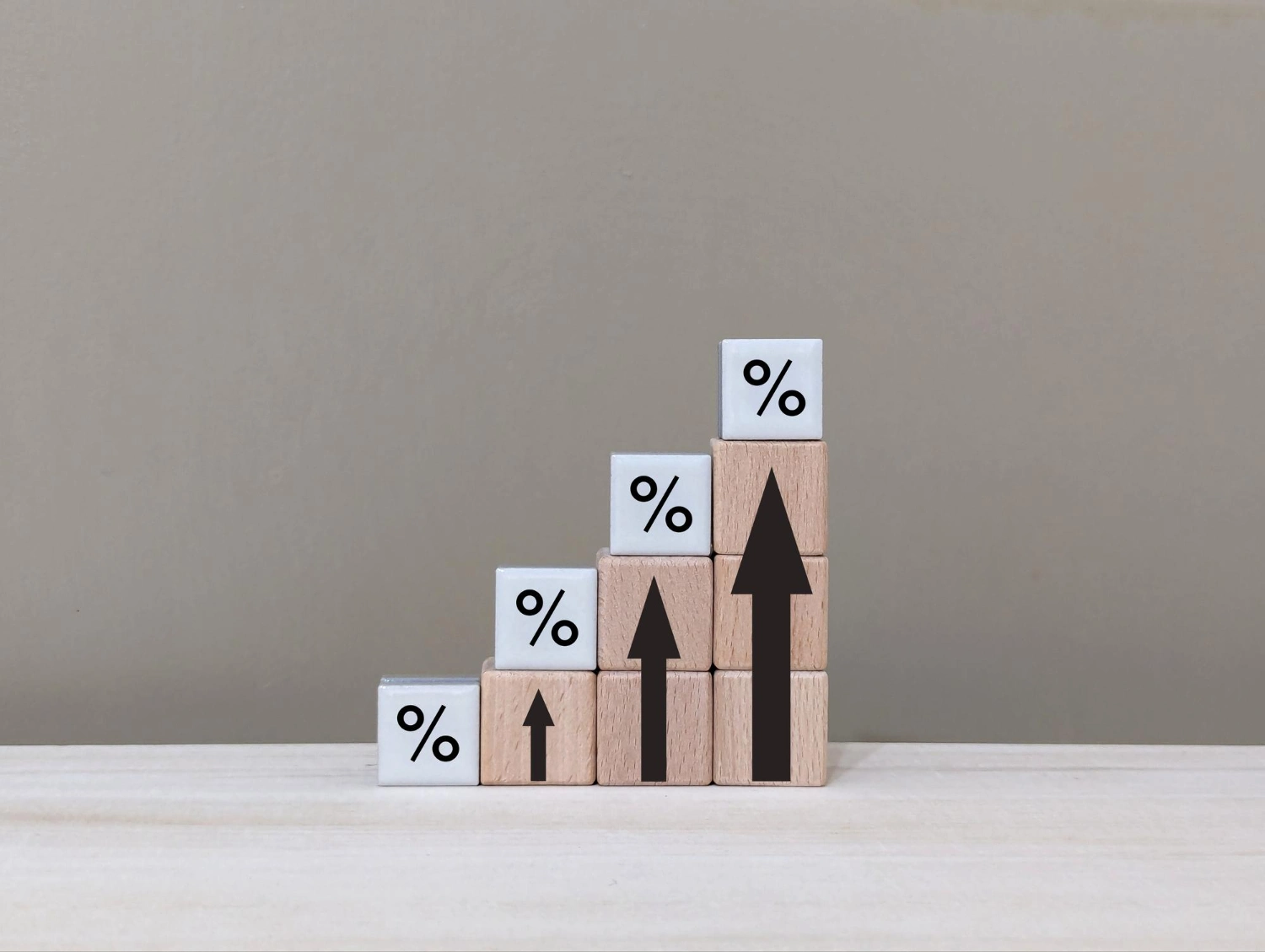
When interest rates rise, borrowing becomes more expensive across the entire economy. That simple shift sets off a chain of consequences that touches mortgages, credit cards, business investment, stock markets, and international trade. It’s one of the most powerful tools a central bank has, and understanding it explains a lot about why economies move the way they do.
Between 2022 and 2023, the U.S. Federal Reserve raised its benchmark rate from near zero to over 5% in under two years, one of the fastest rate-hiking cycles in modern history. The effects were immediate and wide-ranging. That episode offers a real-time illustration of exactly how this works.
Why Do Interest Rates Rise in the First Place?
Central banks raise interest rates primarily to fight inflation. When prices rise too quickly, making borrowing more expensive slows spending and cools demand. Less spending means less upward pressure on prices. It’s a deliberate slowing of the economic engine.
Rates can also rise because an economy is growing very fast and central banks want to prevent it from overheating. But the most common trigger, especially in recent years, is elevated inflation that the central bank needs to bring under control.
The Federal Reserve explains its dual mandate as maintaining maximum employment and stable prices. Rate hikes serve the stability side of that balance.
What Happens to Mortgages and Housing When Rates Go Up?
This is where most households feel rising rates most directly.
When the central bank raises its benchmark rate, mortgage rates follow. A 30-year fixed mortgage that was 3% might climb to 7% over the course of a rate-hiking cycle. On a $400,000 loan, that difference amounts to roughly $1,000 more per month in payments.
The effect on housing markets is significant. Higher mortgage rates reduce affordability, which typically slows home sales and can push prices down. Existing homeowners who locked in low rates during 2020 and 2021 often stay put rather than sell, which reduces housing supply. It’s a frustrating dynamic for buyers.
How Do Rising Interest Rates Affect Businesses?
Businesses that rely on debt to fund operations or expansion pay more to borrow. That directly affects profitability and investment decisions.
- Small businesses with variable-rate loans see their interest costs increase immediately
- Companies looking to expand may delay or cancel projects if the cost of financing rises sharply
- Highly leveraged companies, those with large existing debts, face growing interest burdens on existing obligations
- Startups that depend on cheap capital to fund growth before turning profitable become harder to finance
Higher rates don’t kill business investment overnight, but they do raise the bar. Projects that looked attractive at 3% financing might not pencil out at 7%.
For a structured look at how businesses evaluate investment risk under different rate environments, see our piece on the Capital Asset Pricing Model (CAPM).
How Do Higher Interest Rates Affect Stocks?
The relationship between interest rates and stocks is one that often catches casual investors off guard.
Higher rates make bonds more attractive relative to stocks. If a U.S. Treasury bond now pays 5%, investors need stocks to offer returns meaningfully above that to justify the added risk. This recalibration tends to push stock valuations down, especially for growth stocks whose value depends on earnings far into the future.
The reason is mathematical. Higher discount rates used in valuation models reduce the present value of future earnings. A company expected to earn a lot in 10 years is worth less today when you’re discounting those future earnings at 6% instead of 2%.
Value stocks and dividend-paying companies tend to hold up better. Companies with strong current earnings are less affected than those whose value is entirely based on future growth potential.
What Happens to Bonds When Interest Rates Rise?
Here’s a relationship that confuses a lot of people: when interest rates rise, bond prices fall.
The reason is straightforward once you see it. Suppose you hold a bond that pays 3% interest. Now new bonds are being issued at 5%. Your 3% bond is less attractive, so its market price drops until its effective yield matches the going rate. The bond doesn’t pay less, it just gets cheaper to buy, which raises the yield for new buyers.
This inverse relationship is fundamental. It explains why rising rates are generally bad news for existing bond holders, even though they make new bond purchases more attractive.
Are Higher Interest Rates Good or Bad?
The answer depends entirely on who you are and what you’re trying to do.
- Savers benefit: interest on savings accounts, CDs, and money market funds rises
- Borrowers pay more: mortgages, car loans, and credit cards become more expensive
- Retirees on fixed income may benefit if they hold bonds or savings instruments
- Young homebuyers face steeper barriers to entry in the housing market
- Businesses face higher financing costs, which can slow hiring and expansion
To be fair, rate hikes also represent a vote of confidence in the economy’s underlying strength. Central banks typically only raise rates when they believe the economy can handle it. A central bank that never raises rates is often responding to persistent weakness.
What Happens to Interest Rates in a Recession?
In a recession, central banks typically cut rates, not raise them. The goal shifts from cooling inflation to stimulating growth. Lower rates encourage borrowing and spending, which helps lift the economy.
But there’s a tension here. If a central bank raises rates to fight inflation and does it too aggressively, it can tip the economy into recession. That’s the difficult balancing act policymakers face. The ‘soft landing’ everyone hopes for is when inflation comes down without a recession occurring. It’s hard to achieve and rare in practice.
When interest rates fall in response to recession, bond prices rise (the inverse relationship again), mortgage rates fall, and borrowing becomes cheaper. The housing market often picks up.
How Does Raising Interest Rates Help the Economy?
The mechanism runs through inflation control. When prices are rising too fast, they create economic uncertainty and erode purchasing power. Businesses can’t plan effectively. Workers lose real income. Savers get punished.
By cooling demand, higher rates slow the price rises. Once inflation stabilizes, the economy can grow on a more solid footing. The pain of rate hikes is meant to be temporary, buying time for a more sustainable expansion.
This connects to broader questions about what it means to be a stakeholder in an economy; our piece on what a stakeholder is in business explores how different groups have different interests at stake in economic decisions.
What Does the Rising Interest Rate Environment Mean for You?
Practically speaking, rising rates mean a few things worth acting on.
- Variable-rate debts, like adjustable mortgages or credit card balances, should be paid down more aggressively or refinanced to fixed rates where possible
- New savings should be directed toward products that benefit from higher rates: high-yield savings accounts, CDs, or short-term Treasuries
- Large purchases financed by debt, like homes or cars, become more expensive, so budgeting needs to account for higher monthly costs
- Investment portfolios may need rebalancing as the risk-reward calculus between stocks and bonds shifts
The good news, if you’re a saver, is that rate hikes are one of the few economic events that actually work in your favor. The returns on cash held in savings instruments rise meaningfully during rate-hike cycles.
What This Means for You
Interest rate changes ripple through an economy in ways that take months to fully show up. A rate hike announced today affects mortgage applications next month, corporate investment decisions next quarter, and inflation figures six months from now. The lag makes it easy to underestimate how connected everything is.
Whether rates are rising or falling, the key is understanding which side of the borrowing-saving equation you’re on. Borrowers and savers experience rate cycles differently, and so do growth-oriented investors versus income-oriented ones.
Rate decisions are never made in isolation. They respond to inflation data, employment figures, and global economic conditions. Following them over time turns out to be one of the most practical things an ordinary person can do to understand what’s happening in the economy, and why.