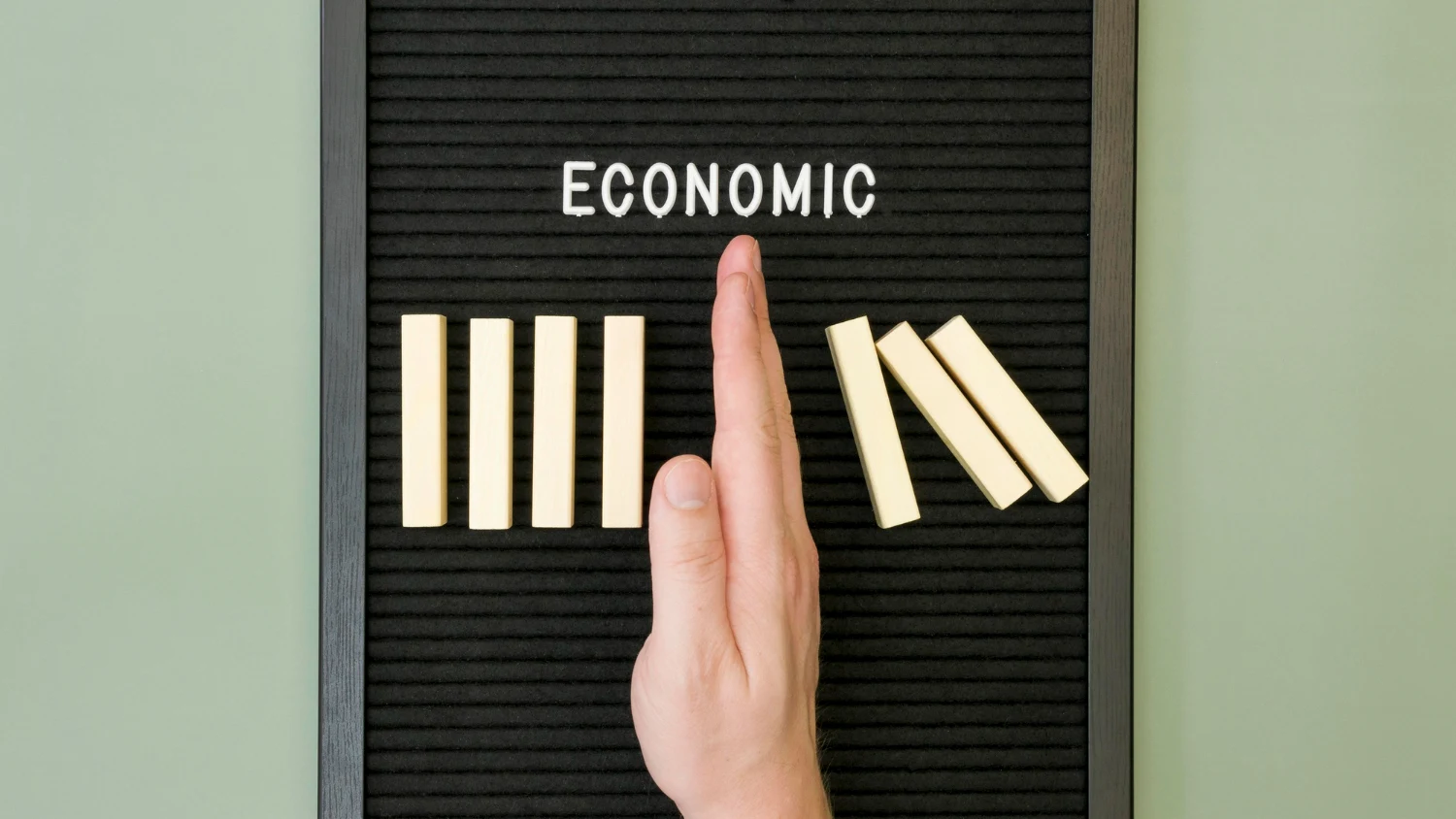
A recession is a significant, widespread, and prolonged downturn in economic activity. Most people first encounter the definition in terms of GDP: two consecutive quarters of negative growth. That’s a common shorthand, but it’s not the official definition in the United States, and it misses a lot of what makes a recession feel real on the ground.
Recessions mean job losses, business closures, reduced household income, and shrinking investment. They vary enormously in severity, from mild contractions that last a few months to deep crises like the 2008-2009 Great Recession that reshapes economies for years.
What Is a Recession, Technically?
In the U.S., the National Bureau of Economic Research (NBER) is the official body that declares recessions. Their definition goes beyond two negative GDP quarters. The NBER looks for a significant decline in economic activity that is spread across the economy and lasts more than a few months. They examine employment, income, consumer spending, and industrial production alongside GDP.
This distinction matters. The U.S. economy technically posted two consecutive quarters of negative GDP growth in early 2022, but the NBER did not declare a recession because the labor market remained strong. Millions of jobs were being added even as GDP dipped slightly. That’s an unusual configuration.
The NBER’s Business Cycle Dating Committee publishes its recession determinations with detailed methodology that goes well beyond a single metric.
What Causes a Recession?
Recessions don’t have a single cause. But some patterns appear repeatedly.
- Financial crises: excessive debt, speculative bubbles, or bank failures can freeze credit and collapse spending rapidly
- External shocks: oil price spikes, global pandemics, natural disasters, or geopolitical disruptions can suddenly reduce economic activity
- Monetary policy: central banks that raise interest rates too aggressively to fight inflation can tip the economy into contraction
- Demand collapse: when consumers and businesses lose confidence and pull back spending simultaneously, the self-reinforcing nature of the pullback creates a spiral
- Asset bubble bursts: when inflated housing or stock prices collapse, they destroy wealth and reduce spending capacity
The 2008-2009 recession was triggered by a housing bubble collapse and a financial crisis. The 2020 recession came from a pandemic-driven halt in economic activity. The causes were completely different, but both resulted in significant job losses and GDP contractions.
What Happens During a Recession?
The experience of a recession varies by sector and by individual circumstance, but some common patterns emerge.
- Unemployment rises: businesses reduce headcount as revenues fall, and hiring slows dramatically
- Consumer spending contracts: households cut discretionary spending, which reduces revenue for businesses, which leads to more job cuts
- Business investment falls: companies delay or cancel capital expenditure, research, and expansion plans
- Credit tightens: banks become risk-averse and tighten lending standards, making it harder for businesses and households to borrow
- Government deficits widen: tax revenues fall while spending on unemployment benefits and safety nets rises
Stock markets often decline before a recession is officially declared, since markets are forward-looking and investor expectations shift. Housing markets can weaken as job insecurity reduces demand.
How Long Do Recessions Last?
Shorter than most people expect, historically. Post-World War II U.S. recessions have averaged about 10 months, according to NBER data. But that average hides enormous variation.
The 2001 recession lasted 8 months. The 2008-2009 recession lasted 18 months, the longest since the Great Depression. The 2020 COVID recession lasted only 2 months in the official record, the shortest ever, though its effects on specific industries, hospitality, travel, retail, lasted much longer.
Recovery speed also varies. Some recessions are followed by sharp V-shaped recoveries. Others produce slow, grinding recoveries where unemployment stays elevated for years even as GDP returns to growth.
What Does a Recession Mean for Everyday People?
The most immediate effect for most people is job insecurity. Layoffs increase during recessions, and new job opportunities shrink simultaneously, making it harder to find new employment quickly.
Beyond employment, recessions affect:
- Retirement savings: stock market declines can reduce the value of 401(k)s and IRAs significantly
- Housing: home values may fall, and those who need to sell during a downturn may take losses
- Credit: approval rates for loans and credit cards tighten; existing variable-rate debt becomes harder to manage if interest rates stay elevated
- Small businesses: revenue declines without the same financial buffers large corporations maintain
Strangely, recessions don’t hit everyone equally. People with secure jobs and diversified savings often weather them with limited impact. People without savings buffers, in volatile industries, or in the early stages of their careers tend to absorb disproportionate damage.
The relationship between recession and debt management connects to what it means to be a stakeholder in economic outcomes; see our explainer on what a stakeholder is in business.
Recession vs Deflation: What’s the Difference?
Recession and deflation often appear together but are not the same thing. A recession is a period of declining economic output and employment. Deflation is a sustained fall in the general price level.
They feed each other in dangerous ways. Deflation can cause or deepen a recession by encouraging consumers to delay spending (waiting for lower prices), which reduces business revenue, which leads to layoffs, which reduces consumer spending further. But recessions can occur without deflation, and deflation can occur without a recession being declared.
For a deeper look at how deflation interacts with economic cycles, our guide to decentralized finance and monetary systems explores related territory.
Are We Going into a Recession? How to Tell
There’s no perfect predictor, but economists watch several leading indicators:
- Inverted yield curve: when short-term interest rates exceed long-term rates, it has historically preceded many U.S. recessions
- Rising initial jobless claims: a sharp increase in unemployment benefit applications signals weakening labor market conditions
- Declining consumer confidence: surveys tracking household expectations about the economy often turn negative before recessions officially begin
- Manufacturing contraction: the ISM Manufacturing Index below 50 signals contraction in factory output
- Falling leading economic index: the Conference Board’s LEI tracks 10 forward-looking components
None of these is definitive on its own. But when several turn negative simultaneously, the probability of a recession rises considerably.
Understanding how wages and labor policy interact during downturns is explored in our piece on the minimum wage increase and economic impact.
What Defines a Recession: The Bigger Picture
Recessions are a normal, if painful, part of economic cycles. They correct imbalances, reset inflated asset prices, and prompt households and businesses to rebuild financial resilience. That doesn’t make them any less disruptive to individuals who lose jobs or see their savings shrink.
The policy response matters enormously. Aggressive fiscal stimulus (government spending) and monetary policy (rate cuts, quantitative easing) can shorten recessions and speed recovery. The 2020 recession’s brief official duration owed a lot to unprecedented government support.
Understanding recessions doesn’t require predicting them. It requires knowing how to respond: maintaining an emergency fund, reducing high-interest debt, diversifying income, and keeping perspective about market cycles. Those habits help whether or not a recession is imminent.